
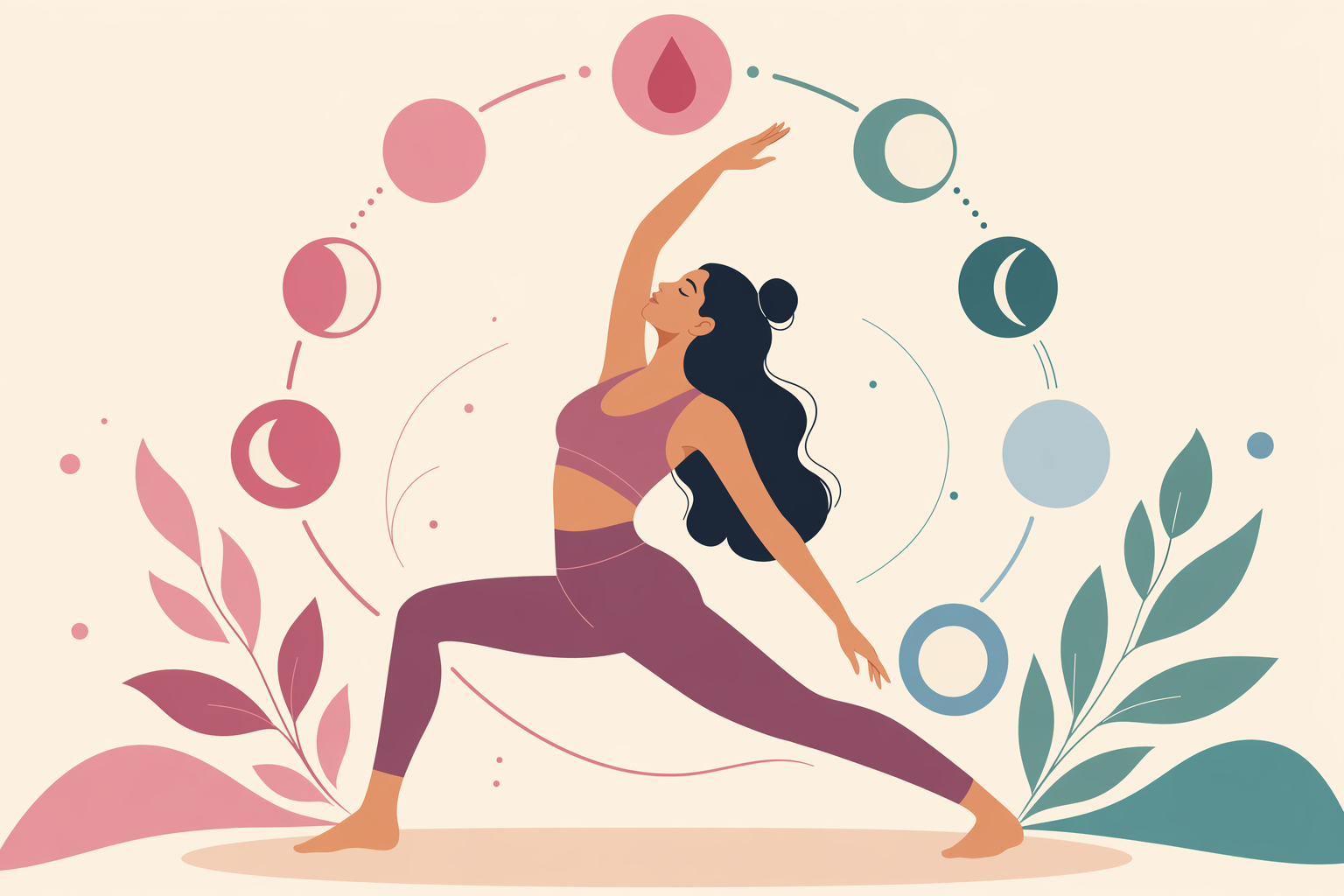
If the same workout feels easy one week and unusually hard the next, your menstrual cycle may be one reason. Research suggests that exercise capacity, recovery, and injury risk can shift across cycle phases, though the size of those changes varies from person to person.
The follicular phase: when performance may improve
Many people perform better during the first half of the cycle, from the period through ovulation. Several physiological changes may contribute.
Estrogen supports muscle performance
Rising estrogen during the follicular phase can affect exercise in several ways:
- Strength and power output tend to be higher because estrogen enhances muscle contractile function.
- Improved carbohydrate metabolism may make more fuel available during high-intensity efforts.
- Estrogen's anti-inflammatory properties may reduce exercise-induced muscle damage.
Recovery is faster
During the follicular phase, higher HRV and a lower resting heart rate indicate more parasympathetic nervous system activity. Recovery between sessions may be faster, with better tolerance for training volume and intensity.
Training during the follicular phase
- This can be a useful time for harder workouts such as heavy lifts, interval training, or skill-intensive sessions.
- If you are progressing your training load, this phase may be a good fit.
- Motor learning and coordination may be slightly enhanced, which can help when trying a new activity.
Around ovulation: strong performance with some caution
Estrogen peaks around ovulation, and some people feel physically at their best. Research also suggests that ACL injury risk may be elevated during the ovulatory phase.
One proposed mechanism is estrogen's effect on ligament laxity. The hormone may enhance muscle function while reducing tendon stiffness, which could increase vulnerability to certain injuries.
There is no need to avoid exercise around ovulation. It may be worth paying closer attention to warm-ups, landing mechanics, and joint stability during this window.
The luteal phase: when effort may feel higher
After ovulation, hormonal changes can make high-intensity training feel harder.
Body temperature is elevated
Progesterone raises core temperature by approximately 0.3–0.5°C. During exercise, you may notice that:
- You reach heat thresholds faster, increasing perceived exertion.
- Sweating begins earlier but may be less efficient.
- Time to exhaustion decreases in hot conditions.
Cardiovascular load increases
Resting heart rate is elevated by 2–5 bpm and HRV is reduced, so the body is already working from a slightly higher baseline. The same workout may feel harder, with measurable physiological differences.
Metabolic fuel shifts
During the luteal phase, the body becomes somewhat more reliant on fat oxidation and less efficient at using carbohydrates during high-intensity efforts. Glycogen-dependent activities such as sprints, HIIT, and heavy lifting may feel more draining.
Training during the luteal phase
- If your rate of perceived exertion (RPE) is significantly higher than usual, reducing intensity by 5–10% may help.
- Steady-state cardio may suit this phase because fat-burning capacity is enhanced.
- Sleep, nutrition, and rest become more important when your baseline load is higher.
- Moderate activity can help with PMS symptoms, including mood and bloating, so you do not necessarily need to stop exercising.
The menstrual phase: listen to your body
Exercise during your period is safe and often beneficial. The first 1–2 days may still be difficult because of:
- Low estrogen and progesterone (both at baseline)
- Cramps and prostaglandin-related discomfort
- Possible fatigue from disrupted sleep and iron loss
Some people feel comfortable training once the initial discomfort passes. Estrogen begins rising by day 3, and many report feeling progressively better.
It helps to stay flexible. Day 1 may be a rest day, while on another cycle you may feel comfortable with light-to-moderate activity, which is generally well tolerated.
What research says about cycle-based training
A 2020 systematic review by McNulty et al. found that exercise performance fluctuates across the cycle. The early follicular and ovulatory phases showed the best outcomes for strength and endurance, while the mid-luteal phase showed the worst.
The effects are modest and highly individual. Some people notice a marked difference, while others notice very little. Rather than overhauling a training program around cycle phases, you can use the pattern to make adjustments when your own experience supports them.
A simple framework
| Phase | Training focus | Intensity |
|---|---|---|
| Menstrual (days 1–5) | Light cardio, yoga, walking | Low to moderate |
| Follicular (days 6–13) | Strength, HIIT, skill work | Moderate to high |
| Ovulatory (days 13–16) | Peak performance, with joint care | High |
| Luteal (days 16–28) | Steady-state cardio, moderate strength | Moderate, adjust by feel |
Adjust based on your own response
Your cycle does not dictate what you can do. It may change how a session feels, though, and tracking those changes can help you decide when to push and when to allow more recovery.
References
- McNulty KL, et al. The effects of menstrual cycle phase on exercise performance in eumenorrheic women: a systematic review and meta-analysis. Sports Medicine. 2020;50:1813-1827.
- Brar TK, et al. Effect of different phases of menstrual cycle on heart rate variability. Journal of Clinical and Diagnostic Research. 2015;9(10):CC01-CC04.
- Hewett TE, et al. Anterior cruciate ligament injuries in female athletes: mechanisms and risk factors. American Journal of Sports Medicine. 2006;34(2):299-311.
- Cagnacci A, et al. Modification of circadian body temperature rhythm during the luteal menstrual phase. Journal of Applied Physiology. 1996;80(5):1543-1547.
- Zderic TW, et al. Glucose kinetics and substrate oxidation during exercise in the follicular and luteal phases. Journal of Applied Physiology. 2001;90(2):447-453.
- Daley AJ. Exercise and premenstrual symptomatology: a comprehensive review. Journal of Women's Health. 2009;18(6):895-899.