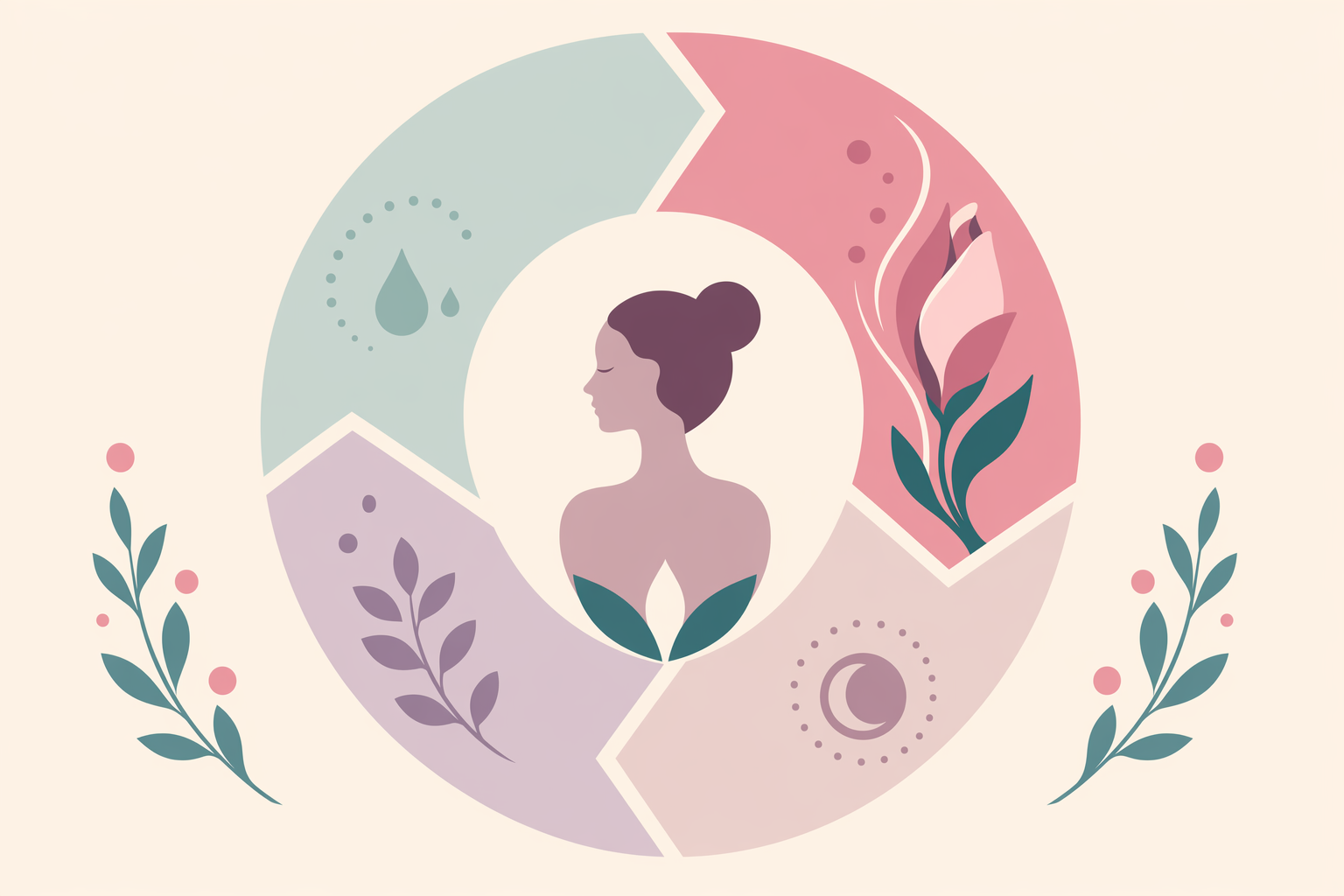
The follicular phase is the first half of the menstrual cycle. It starts on day 1 of your period and ends when you ovulate. The name comes from the ovarian follicles that develop during this time. One of them will eventually release an egg.
When cycle length changes from one month to the next, variation in the follicular phase is usually the reason.
What happens during the follicular phase
Several linked hormonal changes prepare the body for ovulation during this phase.
Days 1–5: menstruation
The phase begins on the first day of your period. Progesterone and estrogen are both at their lowest levels, which triggers the uterine lining to shed. The hypothalamus in the brain detects the low hormone levels and starts signaling for a new cycle.
Pulses of GnRH (gonadotropin-releasing hormone) from the hypothalamus stimulate the pituitary gland to release FSH (follicle-stimulating hormone).
Days 5–10: follicle recruitment
FSH stimulates follicle growth. Approximately 10–20 follicles begin developing in the ovaries, and each contains an immature egg.
As the follicles grow, they produce increasing amounts of estrogen. The rising level has several effects:
- Begins rebuilding the uterine lining (endometrium)
- Triggers changes in cervical mucus (from dry to increasingly wet and stretchy)
- Gradually suppresses FSH, creating a competitive environment in which only the strongest follicle survives
Days 10–14: dominant follicle selection
By approximately day 10, one follicle has outcompeted the others and become the dominant follicle. The rest undergo atresia (degeneration). The dominant follicle continues to grow, reaching about 20mm in diameter, and produces a sharp rise in estrogen.
At this point, the estrogen peak triggers a positive feedback loop. Instead of suppressing the pituitary, the very high estrogen level stimulates a surge of LH (luteinizing hormone). That surge directly triggers ovulation, which typically occurs 24–36 hours later.
How long does the follicular phase last?
The follicular phase is the variable part of the menstrual cycle. The luteal phase is relatively fixed at 12–16 days, while the follicular phase can last from 10 to 21 days or more.
For example:
- A 25-day cycle has a ~11-day follicular phase
- A 28-day cycle has a ~14-day follicular phase
- A 35-day cycle has a ~21-day follicular phase
Stress, illness, travel, weight changes, and perimenopause can lengthen the follicular phase. Anything that disrupts FSH signaling or follicle development can delay ovulation and extend the phase.
How you might feel during the follicular phase
The hormonal changes of the follicular phase can also affect how you feel.
Energy and mood
As estrogen rises after menstruation, most people experience a gradual improvement in energy, mood, and cognitive sharpness. Estrogen enhances serotonin and dopamine activity, which may help explain why the mid-to-late follicular phase often feels like the "best" part of the cycle.
Sleep quality
Sleep tends to be better during the follicular phase. Core body temperature is lower because of estrogen's effect, which can make it easier to fall asleep and improve sleep efficiency.
Exercise capacity
Research suggests that strength and endurance may peak during the late follicular phase and around ovulation. Estrogen has protective effects on muscle tissue and may improve pain tolerance and recovery. For more detail on training across cycle phases, see exercise and the menstrual cycle.
What biometrics show during the follicular phase
An Apple Watch or similar wearable will typically show:
- Wrist temperature is lower and stable, providing a baseline.
- HRV is higher as the parasympathetic nervous system becomes more dominant.
- Resting heart rate is lower and typically reaches its cycle minimum.
- Sleep scores are often at their best.
Once ovulation occurs and progesterone rises, these metrics shift. The follicular-to-luteal transition is one of the more detectable changes in wearable data.
When does the follicular phase end?
The follicular phase ends at ovulation, when the dominant follicle ruptures and releases the egg. You can confirm that transition retrospectively through:
- A sustained upward temperature shift (0.1–0.3°C)
- A shift in cervical mucus from egg white to thick/sticky
- An HRV decline beginning within 1–2 days
The luteal phase then begins and lasts until your next period.
Why phase length changes
During the follicular phase, the hormonal environment builds toward ovulation and one follicle becomes dominant. Variation in the length of this phase is normal. It also explains most month-to-month differences in total cycle length.
References
- Mihm M, Gangooly S, Muttukrishna S. The normal menstrual cycle in women. Animal Reproduction Science. 2011;124(3-4):229-236.
- Reed BG, Carr BR. The Normal Menstrual Cycle and the Control of Ovulation. Endotext. 2018.
- Gougeon A. Regulation of ovarian follicular development in primates: facts and hypotheses. Endocrine Reviews. 1996;17(2):121-155.
- Baerwald AR, Adams GP, Pierson RA. Ovarian antral folliculogenesis during the human menstrual cycle: a review. Human Reproduction Update. 2012;18(1):73-91.
- Filicori M. The role of luteinizing hormone in folliculogenesis and ovulation induction. Fertility and Sterility. 1999;71(3):405-414.
- Fehring RJ, et al. Variability in the phases of the menstrual cycle. Journal of Obstetric, Gynecologic, & Neonatal Nursing. 2006;35(3):376-384.
- Barth C, Villringer A, Sacher J. Sex hormones affect neurotransmitters and shape the adult female brain during hormonal transition periods. Frontiers in Neuroscience. 2015;9:37.
- Baker FC, Driver HS. Circadian rhythms, sleep, and the menstrual cycle. Sleep Medicine. 2007;8(6):613-622.
- Sung E, et al. Effects of follicular versus luteal phase-based strength training in young women. SpringerPlus. 2014;3:668.
- Brar TK, et al. Effect of different phases of menstrual cycle on heart rate variability. Journal of Clinical and Diagnostic Research. 2015;9(10):CC01-CC04.